
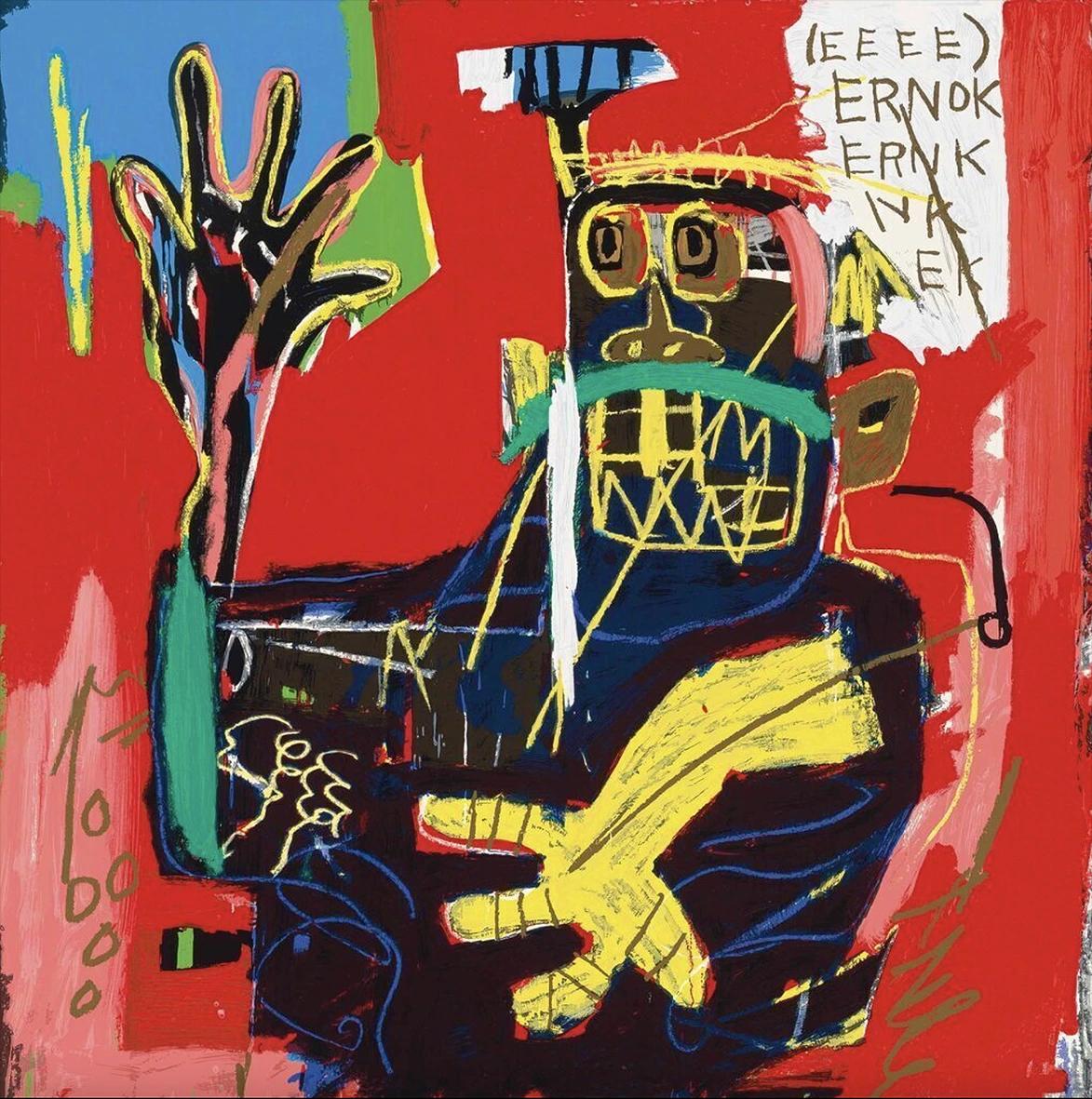
Jean-Michel Basquiat’s work can feel as though several thoughts are taking shape at once. Words interrupt figures, symbols compete with blocks of colour and a mark that first seems incidental can pull the viewer towards another reading. The energy invites a close look, but it also makes the image easy to recognise across different media, allowing a painting’s visual language to remain powerful when it appears in a later edition print.
For collectors, the important clue may be a date written as a pair of years. One can refer to the original image and the other to the production of the print, revealing that the two objects belong to different moments. Reading both dates helps prevent an understandable but significant mistake: assuming that every edition bearing Basquiat’s name was printed and signed by him during his lifetime.
The image and the edition have connected histories
Untitled (Ernok) illustrates the distinction. Auction catalogues describe a screenprint published in 2001, carrying the artist’s estate stamp and the signature of Gerard Basquiat as administrator of the estate. The work translates an earlier image into an authorised later edition, so the signature documents that edition’s history rather than representing Jean-Michel Basquiat’s own signature on the sheet.
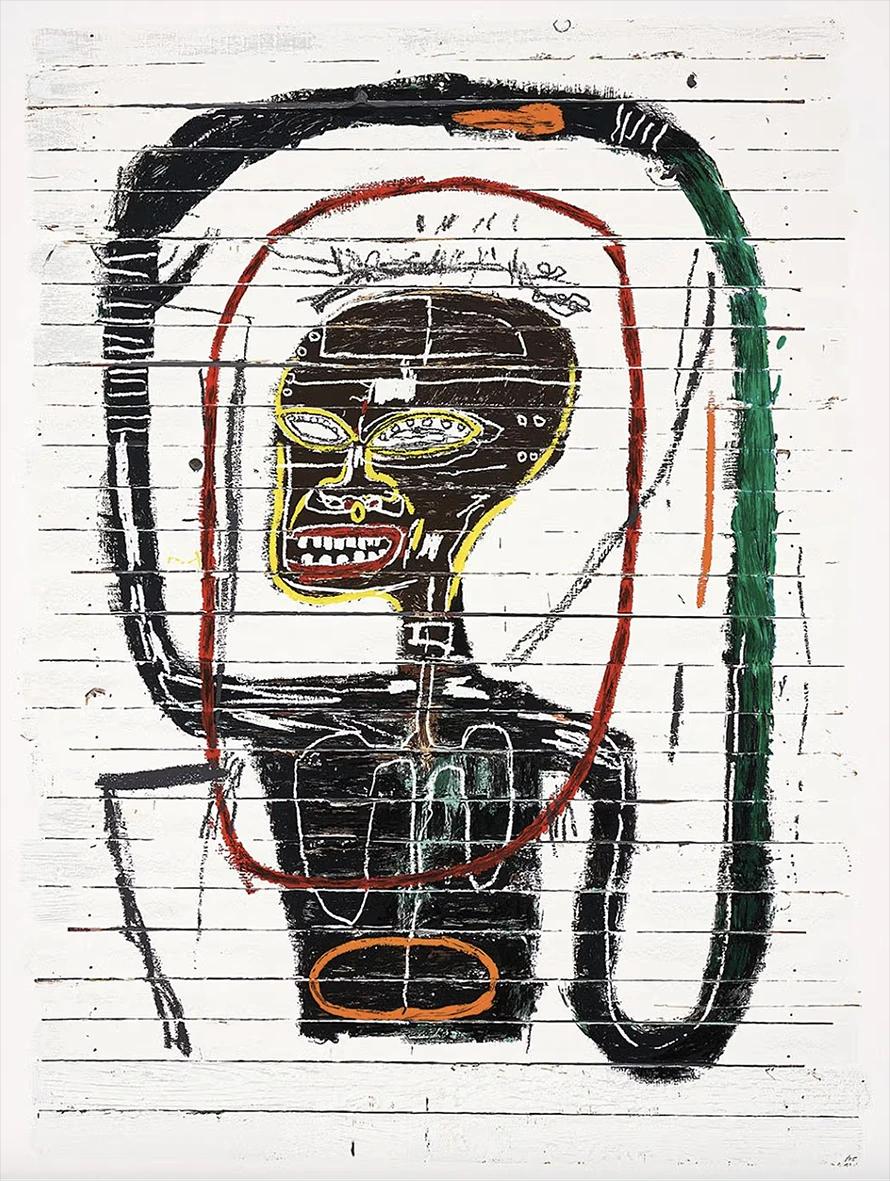
Flexible offers another example of why the second date matters. Catalogued as 1984/2016, the screenprint connects a 1984 painting with a print produced decades later. The dates are useful information about how the object came into being, not an incidental complication to skip on the way to the price. Different editions and impressions may also have their own proof designations and documentation, which need to be checked for the work under consideration.
Those distinctions do not remove the cultural interest of the print. Basquiat’s combination of language, bodily forms and recurring symbols remains an invitation to explore questions of identity, power and representation. The collector can respond to that visual and intellectual force while still describing the physical object accurately, allowing appreciation and documentation to support one another.
Why precision improves the price comparison
A unique painting and a later screenprint are connected through an image, but they do not share a single interchangeable market. A painting’s auction result can contribute to the broader story of the artist’s reputation while remaining an unsuitable direct comparison for a posthumous edition. The relevant evidence for a print is usually found among works with appropriately similar publication histories, edition characteristics and condition.
This is where clear catalogue language benefits a newcomer. “After Jean-Michel Basquiat” can appear in an auction description to distinguish the later edition’s relationship to the source work. A buyer should read through the complete entry, including the medium, publication date, edition number and estate information, rather than deciding from a headline or thumbnail that it must be the same kind of object as another Basquiat they have seen.
What a smaller investment should make clearer
Fractionalisation can add another level of access when an identified Basquiat edition is offered through a platform. Several people participate in the interest linked to that physical work, with the unit rights and practical arrangements set out separately. The lower individual commitment makes it possible to consider the proposition without buying the whole print, but the artwork’s history remains the foundation of the decision.
For someone researching a Fraction through The QU4RTER, the two-date question is a good way to begin: when was the source image made, when was this edition produced and what authorises this particular impression? Follow those answers through the valuation and terms before committing. A careful description does more than avoid confusion; it gives the reader a richer story about how Basquiat’s work continues to reach new audiences through specific, identifiable objects.