
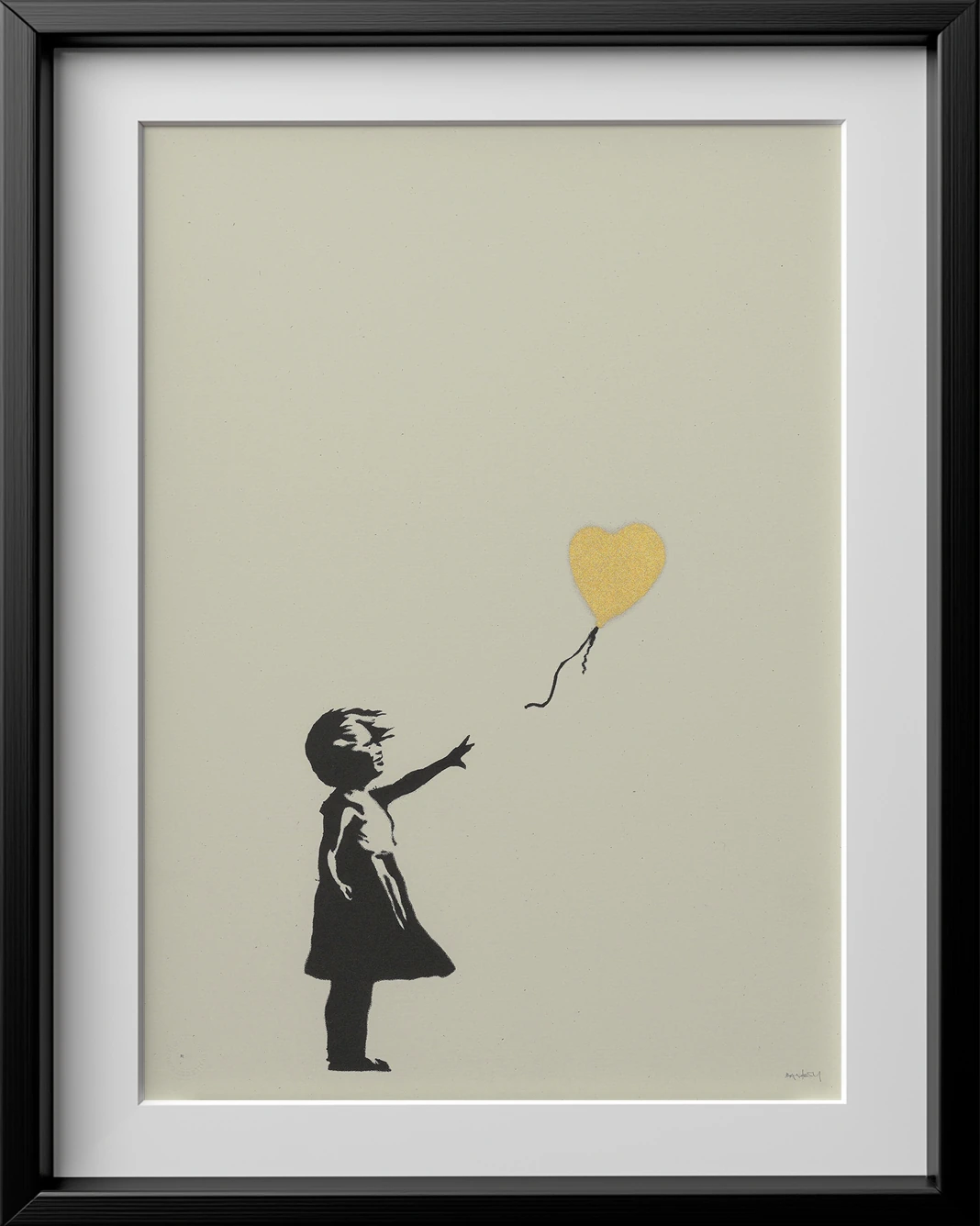
Banksy’s visual language is designed to be understood quickly, which can make a familiar image feel reassuring before much is known about the object carrying it. A flower thrower, a balloon or a monkey may be unmistakable as a subject, but recognition does not establish that a particular print is an authentic work by the artist. For a collector, the evidence accompanying the object is what turns a familiar picture into something that can be properly researched.
This is not an abstract concern. Pest Control, Banksy’s official point of contact and the source of his certificates of authenticity, warns on its website about convincing fake prints and offers a checking service for prospective buyers. The service provides an important starting point in a market where a persuasive story or a recognisable signature should not be treated as sufficient proof on its own.
Different documents answer different questions
Authentication concerns whether a work is what it is represented to be. Provenance describes its history of ownership and movement, while a condition report addresses its physical state. The three can support one another, but they are not interchangeable: an authentic print can still have damage, and an impressive account of where a picture has been does not remove the need to establish its identity.
Pest Control’s role is particularly significant for Banksy because the artist’s public profile has developed around anonymity and work outside conventional gallery settings. Its guidance also makes clear that certificates are not issued for every object bearing his imagery. Collectors should therefore avoid assuming that an unauthorised product, a reproduction and a documented edition print occupy the same category simply because they show the same image.
The catalogue for Sotheby’s 2021 sale of Girl with Balloon – Colour AP (Gold) illustrates how object and evidence can be described together. It identifies the work’s signature, AP 7 numbering, publisher’s blindstamp and accompanying Pest Control certificate. Those details connect the documentation to a particular impression, rather than offering a general assurance about every gold balloon image a buyer might encounter.
Condition remains part of the story
A work can be genuine while differing materially from another impression used as a price comparison. Paper may have faded, been trimmed or acquired marks through handling, and the quality of framing or previous storage can affect what a buyer sees. A clear condition account helps someone understand those differences before deciding whether a valuation is supported by the evidence.
This is especially useful for a newcomer, because it replaces a vague expectation of certainty with specific information that can be checked. The aim is not to become an authentication specialist overnight, but to know which evidence supports which claim and who produced it. Where the description leaves an important gap, asking for clarification is part of ordinary research rather than an admission that the buyer lacks expertise.
Several investors still depend on one physical work
Fractionalisation divides participation in an artwork, but every unit remains connected to the identity and condition of the underlying object. A platform’s own record of a buyer’s holding answers a different question from the artwork’s authentication; both need to make sense. The smaller financial commitment does not create a separate, less demanding standard for explaining what the art actually is.
For readers considering a Banksy Fraction through The QU4RTER, a useful first investigation is to connect the work’s description with its supporting information, then establish how custody and the purchase rights are documented. The paperwork should make the exciting part of collecting more secure intellectually: you can concentrate on why a particular image matters to you, knowing which object it represents and what evidence stands behind it.