An artwork can be familiar for years before we encounter it in person. Reproductions travel easily, but they flatten differences of scale, surface and colour, making a print on paper look much like the same image on a phone. Standing in front of the physical work restores those differences, and can explain why someone who already knows an image still wants to spend time looking at it.
For fractional collectors, that experience raises a practical question. Their investment is connected to a real object, yet the day-to-day relationship may take place almost entirely through an app, a valuation update and a record of the units they hold. The QU4RTER’s Art Lounge concept is intended to close that distance by creating members’ spaces in which collectors can encounter artworks and one another, bringing a physical dimension to a model usually introduced through its smaller entry price.
What a screen leaves out
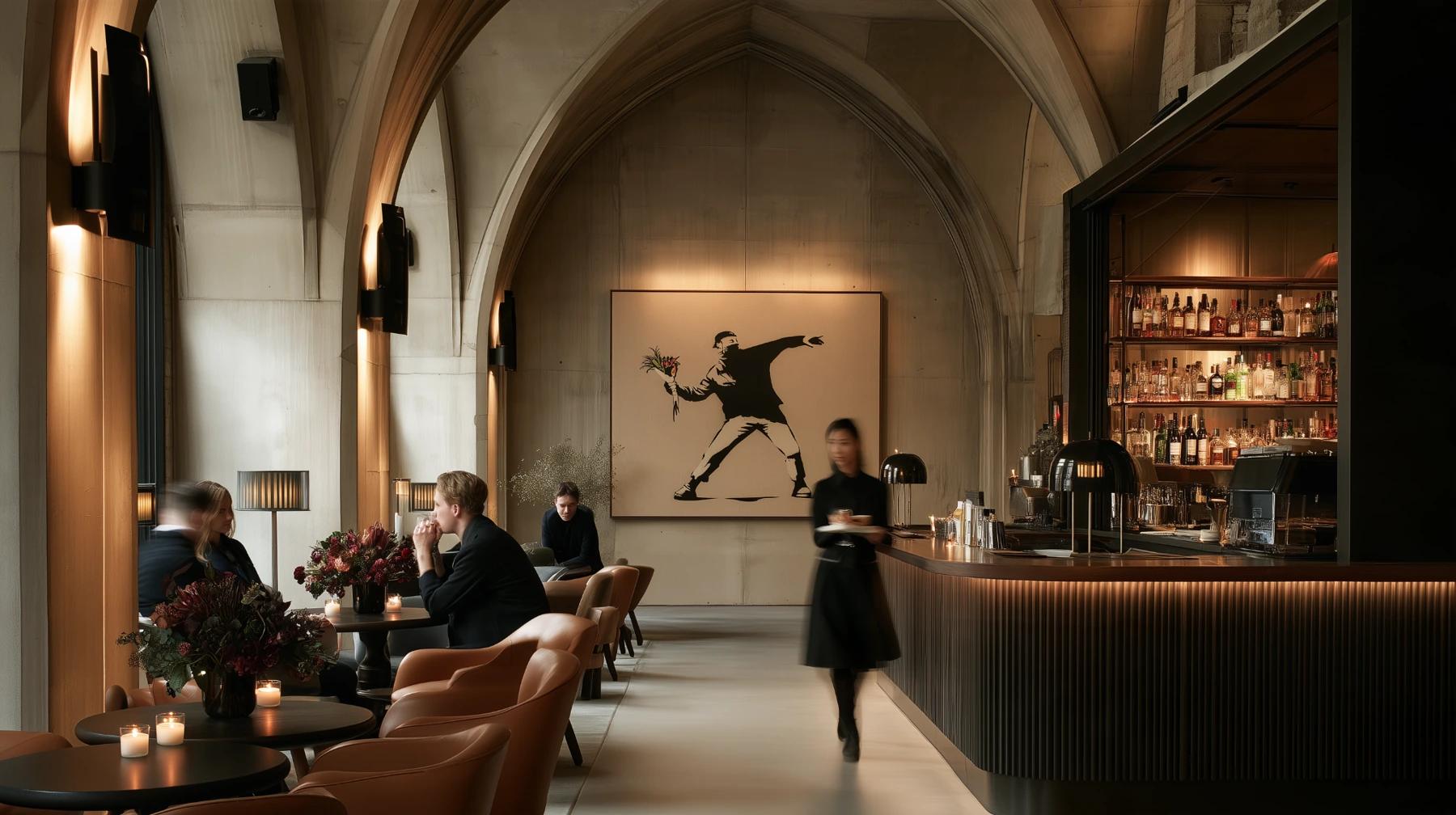
Consider the way Banksy uses a sharply defined figure against a largely empty background. On a small screen, the central joke or gesture dominates; in front of a print, the relationship between the image, the surrounding paper and the frame becomes part of the experience. A familiar motif begins to feel less like a piece of visual shorthand and more like a deliberately made object with its own scale and presence.
Warhol offers another example. His celebrity portraits turn widely circulated photographs into arrangements of saturated colour, so the face arrives with one kind of familiarity while the physical screenprint supplies another. Looking at the ink and the boundaries between colours can make the process of repetition more apparent. What seemed to be simply a picture of a famous person becomes a work about how famous images are produced and consumed.
These observations do not establish an artwork’s investment value, but they enrich the judgement behind choosing it. A collector may find that a work becomes more rewarding over repeated visits, particularly when someone else points out a reference or a detail they had missed. The ability to look again can make a long holding period culturally interesting rather than a stretch of time measured only by changes in a quoted valuation.
A place for the collection to have a social life
The first QU4RTER Art Lounge is being created in a former chapel in Shoreditch, east London. The proposed members’ club is intended to combine encounters with art and a setting in which collectors can meet, with opening and access arrangements to be announced. It should therefore be understood as a developing part of the platform’s offer, rather than a venue that readers can already assume is open to visit.
The appeal of the concept is easy to understand. Someone researching a first Banksy may want an explanation of the edition, while someone who has already invested may be more interested in discussing why that image mattered to them. A shared space can accommodate both conversations, allowing knowledge to circulate without turning every encounter into a sales presentation. Its success will depend on the quality of that experience as much as on the building itself.
Where the experience meets the investment
Fractionalisation allows several people to hold interests linked to an artwork while the physical object remains intact. Viewing it does not require each participant to take possession, and a club setting can potentially let more than one collector develop a relationship with the same work. That is a different form of access from hanging a picture at home, but it can have its own pleasures.
Readers should distinguish those cultural benefits from the financial rights attached to a Fraction. The purchase terms govern the investment, while the membership and venue arrangements determine access to any space or events. For those who care about both, the Art Lounge is a reason to investigate how the two fit together. An art investment can then be considered through the experience of looking, learning and meeting people, alongside the necessary questions about value and eventual resale.